👤
Guest User
×
We’re so excited to have you here!
Just fill up your details and our experts will be in touch with you at the earliest!
✅ Thank you! We will contact you soon.
OpeXIntel transforms enterprise operations into a continuously transforming intelligent ecosystem powered by AI. It preserves institutional knowledge, connects intelligence across systems, and enables faster, context aware operational decisions
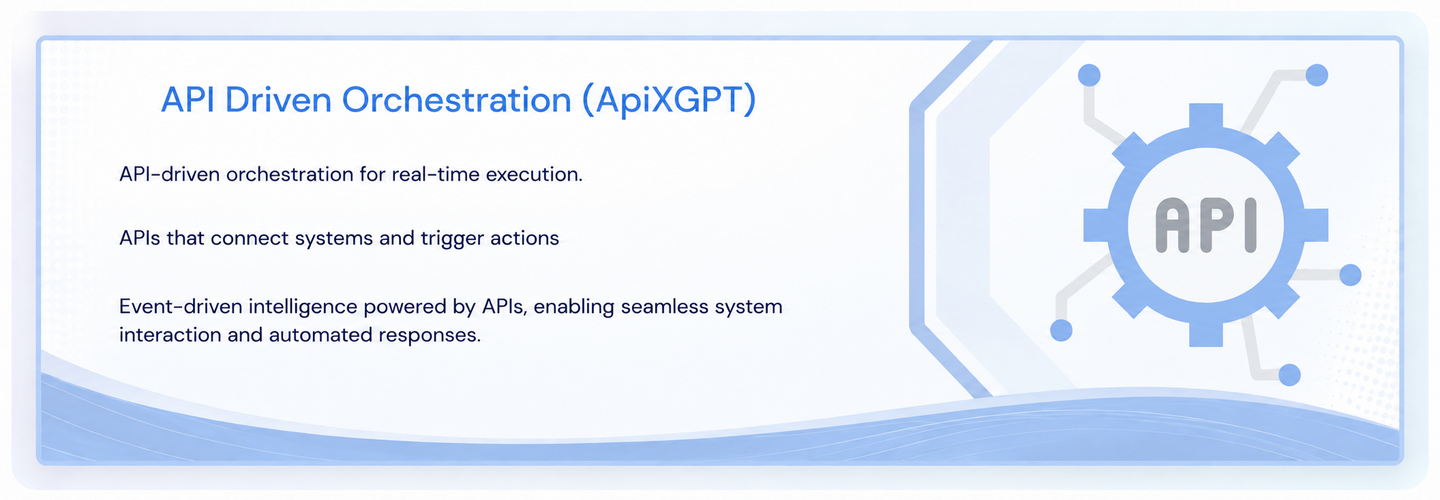
Powered by dynamic agentic workflows, API orchestration, LogX intelligence, MCP-driven integrations, and the
OIASYS framework , OpeXIntel unifies enterprise data, systems, APIs, events, and knowledge into a
single
intelligent operational layer—built to continuously understand, decide, and act.
Two-minute expert clips that instantly clarify core product concepts. Built for speed and scale, crafted from the best of industry SMEs.
275+ VideosPrecision-crafted prompts that sharpen learning, unlock AI-led innovation, and empower teams to operate with confidence in an AI-first world.
272+ PromptsConfigure events in minutes and automate operations instantly with agentic AI.
Real-time UpdatesTurn your firm’s operational events into configurable AI agents and API-driven execution endpoints. All of it—by you. The control is back in your hands.
Full ControlWith over two decades of deep expertise in AI, Capital Markets, and Healthcare, our team is passionate about making OpexIntel an essential partner in your organization’s operational excellence.
20+ Years of ExperienceOur multi-cloud architecture across AWS and Google Cloud provides 99.9% uptime and platform-agnostic flexibility, enabling your products across diverse environments to leverage OpexIntel with ease.
99.9% Uptime
Trade Handling, Cashflows, and System Coordination Holiday processing in fixed income is not simply about non-working days; it is about maintaining continuity across trading, settlement, cashflows, and reporting when parts of the market ecosystem are temporarily inactive. Since different participants such as trading desks, clearing corporations, custodians, and paying agents may operate on slightly different calendars, a holiday introduces timing gaps that must be carefully managed. The goal is to ensure that, despite these gaps, all systems remain aligned and the economic reality of trades and cashflows is preserved. Trade Processing Around Holidays Trades do not necessarily stop during holidays. Market participants may still enter trades as-of, forward-dated, or queued transactions. These trades are typically recorded with the next valid business settlement date and held in the system until processing resumes. This creates a buildup of activity that must be processed once systems reopen. Additionally, trades entered immediately after a holiday may include corrections, cancellations, or modifications to previously entered trades. These changes must be carefully handled so that downstream systems, including clearing and settlement platforms, reflect the correct final state of each transaction. Cashflow Timing and Business Day Adjustment One of the most important impacts of holidays is on bond cashflows, particularly coupon and principal payments. When a scheduled payment date falls on a weekend or holiday, standard market convention (in most U.S. fixed income products) is to move the payment to the next business day. This shift introduces additional days of accrued interest, which directly affects settlement calculations, valuations, and accounting. For example, if a coupon date falls on a Saturday and is paid on Monday, two additional days of interest must be considered. This impacts both buyers and sellers depending on settlement timing and must be consistently applied across all systems. Pre-Holiday Preparation Before a holiday, firms perform critical preparation steps to ensure a smooth transition. Trades must be validated, matched, and confirmed before cutoff times. Positions and cash balances are reconciled with custodians and clearing systems to avoid breaks. Any pending settlements or discrepancies are addressed proactively because resolution during the holiday period is not possible. This phase is essential to minimize risk and ensure that all systems are in a clean and synchronized state before entering the holiday window. Post-Holiday Processing and Volume Spike When markets reopen, systems must process all accumulated activity from the holiday period along with new trades. This results in a significant spike in processing volume. Trades entered during the holiday are now validated and routed through the full lifecycle. Cashflows that were deferred are posted, and accrued interest is recalculated based on adjusted business dates. This is one of the most operationally sensitive periods, as errors or delays can propagate quickly across multiple systems. Clearing and Netting (FICC / NSCC) Clearing corporations such as FICC and NSCC play a critical role after holidays by netting multiple days of trading activity into consolidated settlement obligations. Because trades from different days may be included in a single netting cycle, it is essential that all trade modifications, cancellations, and corrections are accurately reflected before submission. Any mismatch between internal records and clearing outputs can lead to incorrect settlement obligations, financial exposure, and reconciliation breaks. Ecosystem Coordination Holiday processing requires tight coordination across the entire fixed income ecosystem. Front-office systems handle trade entry and updates, middle-office systems validate and enrich trades, and back-office systems manage settlement and accounting. Clearing corporations perform netting, custodians manage asset servicing and settlement, and paying agents handle coupon and principal distributions. All these participants must operate with a consistent understanding of business dates, holiday calendars, and processing timelines. A breakdown in any part of this chain can impact the entire lifecycle. Handling Trade Revisions Across Holiday Boundaries A common operational scenario involves trades entered on the first business day after a holiday (for example, Monday), which are then modified or cancelled later the same day. These trades may already be included in preliminary processing or clearing submissions. Systems must ensure that the final state of the trade is correctly reflected in all downstream processes, including netting files and settlement instructions. Failure to handle these revisions properly can result in duplicate trades, incorrect net obligations, or settlement failures. Consolidated View (End-to-End) Concept / Area What Happens Practical Impact Example with Dates / Numbers Trade Entry During Holiday Trade Entry During Holiday Processing backlog builds Trade entered Sunday → processed Monday Trade Modification Post-Holiday Trades revised or cancelled after entry Must update clearing and settlement Trade entered Monday, cancelled Monday → must not appear in netting Coupon on Weekend Payment shifts to next business day Extra accrued interest applied Coupon date Sat Feb 15 → paid Mon Feb 17 → +2 days interest Pre-Holiday Preparation Trades validated and positions reconciled Reduces risk during closure Friday EOD books aligned before Monday holiday Holiday Period No settlement but trades/cashflows accumulate Deferred processing No settlements on Monday holiday Post-Holiday Processing Bulk processing resumes High volume and operational risk Tuesday processes Monday + Tuesday activity Accrued Interest Adjustment Interest recalculated for shifted dates Impacts settlement amount 2 extra days interest added due to weekend FICC / NSCC Netting Multiple days netted together Requires accurate trade state Tuesday net includes Friday + Monday trades Custodian Alignment Positions and cash must match Avoids settlement breaks Custodian reflects adjusted coupon payments System Coordination All systems align on dates and data Ensures end-to-end consistency Front to back systems use same business date logic Holiday processing is fundamentally about managing timing differences across trades, cashflows, and interconnected systems so that the entire market infrastructure remains synchronized despite interruptions to normal cycles. Because time-based assumptions break down during holidays settlement cycles extend, cashflows shift, and multiple days of activity converge into a single processing window precision becomes critical. Without disciplined coordination and accurate system handling, this can lead to misaligned positions, incorrect interest calculations, failed settlements, and liquidity risks; when handled properly, however, it ensures the market continues to function smoothly even under disrupted processing conditions.
An Extendable Bond is a bond that has an initial maturity date but includes an option to extend that maturity to a later date. The extension happens only if the option is exercised, so the bond may either mature on the original date or continue for an additional period. This makes the maturity conditional rather than fixed. How Extendable Bonds Work At issuance, the bond is defined with an original maturity, a coupon rate, and extension terms. At the original maturity date, the option holder decides whether to extend or repay. If extended: Maturity moves forward and Coupon may reset to a market linked rate. If not extended: Principal is repaid and the bond ends Practical Example with Number ABC Corporation issues: Face Value: $10,000,000 with Coupon: 6% fixed, Original Maturity: 5 years with an option of potential Extension: +5 years (issuer option). Annual coupon before extension: $10,000,000 × 6% = $600,000 At Year 5 decision: Assume SOFR = 4%, If extended: New coupon = SOFR + 1% = 4% + 1% = 5% One Consolidated Table Concept or Area Role/Meaning Practical Impact Example with numbers Original Bond Terms Initial structure of bond Defines baseline cash flows Face = $10MM, Coupon = 6%, Maturity = 5 years Annual Coupon Before Extension Fixed interest payment Predictable income for investor $10MM × 6% = $600,000 per year Decision at Year 5 Extension vs repayment Determines continuation or closure Issuer chooses to extend SOFR Assumption Market reference rate Used to reset coupon SOFR = 4% New Coupon After Extension Floating rate after extension Aligns bond with market conditions 4% + 1% = 5% Coupon Payment After Extension (1 Year Example) Interest for extended period Reflects new rate $10MM × 5% = $500,000 for Year 6 Principal Status Whether principal is repaid Impacts investor liquidity $10MM not repaid at Year 5 Extended Timeline New maturity structure Increases duration and exposure Bond continues beyond Year 5 The most important operational aspect of an extendable bond is the decision event at the extension date, which drives downstream processing. Systems must be ready to either generate a principal repayment and close the position or update the bond terms with a new maturity and coupon reset. This impacts cash forecasting, position management, and interest calculation going forward. For operations and technology teams, handling this event correctly is critical because a single decision changes both the lifecycle of the bond and all future cash flows.
Why today's enterprises struggle to unify operations, automation, and AI across disconnected systems.

Flexible engagement options designed to help organizations adopt Operational AI, preserve institutional knowledge, and accelerate enterprise transformation.
Direct access to the Chief Architect to discuss Operational AI opportunities, platform capabilities, and transformation strategy.
Collaborate with the Chief Architect to align implementation, adoption, governance, and measurable business outcomes.
Partner directly with the Chief Architect throughout your enterprise transformation journey, from strategy through execution and scale.
Whether you are exploring Operational AI, preserving institutional knowledge, modernizing legacy ecosystems, or accelerating enterprise transformation, OpeXIntel provides the platform, expertise, and strategic guidance to help your organization move forward with confidence.
From operational visibility and knowledge preservation to workflow orchestration and AI-enabled decision intelligence, OpeXIntel helps bridge the gap between traditional operations and the future of enterprise intelligence.
Schedule a discovery conversation with our team to explore how OpeXIntel can unlock operational intelligence, preserve institutional knowledge, and accelerate your organization's transformation journey.